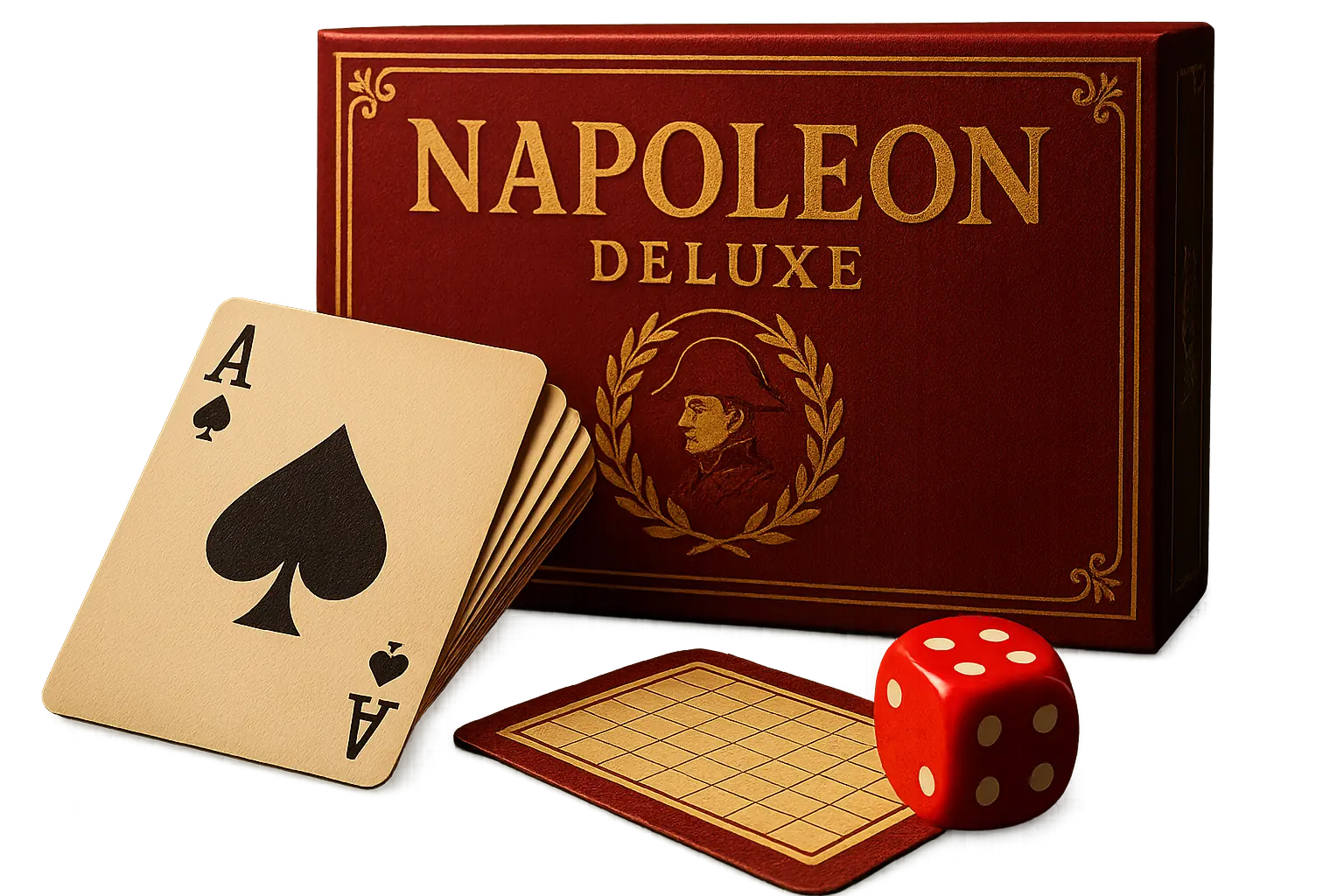
A trick-taking card game from the 1930s still manages to out-bluff most modern board games, and that's the real appeal of Napoleon Deluxe. One player declares an ambitious bid, names a secret partner without revealing who it is, and then the entire table spends the next several minutes trying to figure out who's actually on whose side. It's a game built on controlled deception, and the deluxe edition sharpens that tension with higher-quality components and a cleaner rulebook than the versions that came before it. If you've picked up a copy and are staring at the cards wondering where to start, this guide walks through everything from setup to advanced bidding tactics.
What Is Napoleon Deluxe and Why Players Love It
Napoleon Deluxe belongs to a family of trick-taking games with roots in Japan, where "Napoleon" (often shortened to "Nap") became a staple of casual card nights. The deluxe version refines the classic formula with better card stock, clearer scoring reference cards, and a rulebook that resolves many of the ambiguities found in older printings. It's a game of five players, shifting alliances, and a single bidder who stakes their reputation on a number.
Origins and Theme
The game draws its name and flavor from Napoleon Bonaparte, though the historical connection is cosmetic rather than mechanical. The real draw is the bidding structure, borrowed from older European trick-taking traditions, filtered through a distinctly Japanese approach to hidden partnerships. The "Napoleon" role in-game refers to the player bold enough to declare the highest bid and take command of the hand.
What Makes It Different From Other Trick-Taking Games
Unlike games such as Hearts or Spades, where teams are fixed or the goal is purely individual, Napoleon Deluxe hides team composition until the final card falls. One player is secretly aligned with the bidder, and figuring out who that is - without giving away your own hand - becomes the emotional core of every round. This single mechanic is why players returning to the table after years still find it fresh.
How to Play Napoleon Board Game: Core Rules Explained
Understanding how to play Napoleon board game starts with the deck and the deal, since both differ from standard card game conventions. The deluxe edition uses a modified 52-card deck, often with specific low cards removed depending on player count, and hands are dealt unevenly to create a face-down "widow" or extra pile that factors into bidding.
The Deck and the Deal
Five players typically sit at the table, each receiving a hand of cards while a small number of cards are set aside as the widow. The exact count varies by edition, but the deluxe rulebook specifies the precise breakdown clearly, which is one of its improvements over older, vaguer printings. Players should confirm the deck composition before shuffling, since using the wrong card count throws off bidding math for the entire game.
Card Ranking and Suits
Trump suit determination is central to Napoleon Deluxe rules. Once a bid wins, the bidder names a trump suit, and that suit's cards outrank every other suit for the remainder of the hand. Within suits, ranking generally follows standard high-to-low order, though certain special cards - depending on house variant - can jump rank when trump is declared.
The Role of the Widow
After bidding concludes, the winning bidder takes the widow cards into their hand and then discards an equal number face-down. This exchange is strategically loaded: it lets the bidder strengthen their hand, but every discarded card also quietly signals information to sharp-eyed opponents who track what's missing from play.
Napoleon Deluxe Gameplay: Turn Structure and Bidding
Once the deal and widow exchange are settled, Napoleon Deluxe gameplay moves into its signature bidding phase, followed by trick-taking rounds that determine the hand's winner.
The Bidding Phase Step by Step
Bidding proceeds clockwise, with each player either passing or declaring a higher number of tricks they believe they can win with a chosen trump suit. The bidding escalates until four players pass and one is left standing as Napoleon. This player now carries the full weight of the round: if their team fails to reach the bid, the penalty is often harsher than the reward for success.
Choosing a Secret Partner
Once named Napoleon, the bidder calls a specific card - not a player - and whoever holds that card becomes the secret ally for the hand. Neither the bidder nor the partner is allowed to reveal the alliance outright, though skilled players communicate through the cards they play rather than words.
Playing Tricks and Following Suit
Play proceeds trick by trick, with each player required to follow the suit led if possible. Trump cards can be played to win a trick when a player can't follow suit, adding a layer of tactical timing - holding trump too long risks losing the hand entirely, while playing it too early reveals strength prematurely.
- Each trick is won by the highest card of the suit led, unless a trump card is played
- The winner of a trick leads the next one
- Players must always follow suit if they are able to
Scoring and Winning Conditions
Scoring in Napoleon Deluxe hinges on whether the bidder's team meets, exceeds, or falls short of the declared bid. This binary outcome - success or failure - is what gives every hand its dramatic weight.
How Points Are Calculated
If Napoleon and the secret partner collectively win at least as many tricks as bid, they score points based on the bid's size; the higher the bid, the greater the reward. The remaining three players, acting as the opposing team, score points of their own if they manage to stop the bidder from reaching the target.
Bonus and Penalty Conditions
Certain special bids - for example, declaring a "Napoleon" at the highest possible level - carry doubled stakes. Fail at this level, and the penalty often matches or exceeds the standard bonus, which keeps overly aggressive bidding in check. The deluxe rulebook lays out these multipliers precisely, removing the guesswork that plagued older home-printed rule sheets.
Ending the Game and Declaring a Winner
Games typically run for a set number of hands or until a target score is reached. Because individual scores swing heavily based on bidding success, a single well-timed bid late in the game can overturn what looked like a settled outcome.
Napoleon Strategy Guide: Tips for Winning
Mastering the mechanics only gets a player halfway there. A genuine Napoleon strategy guide needs to address psychology as much as card math, since misreading an opponent's bluff costs more points than misplaying a trump card.
Reading Your Opponents' Bids
The size and timing of a bid tells you more than the number itself. A player who bids early and aggressively often holds strong trump support, while a late, reluctant bid suggests a weaker hand being pushed up by table pressure. Track these patterns across several hands and opponents' tendencies become predictable.
When to Bid Aggressively vs. Conservatively
Aggressive bidding pays off when your hand already contains several high trump candidates and at least one strong side suit. Conservative play makes more sense when your hand is balanced but lacks a clear trump anchor - in these situations, letting someone else take the bidder's risk and position yourself as a disruptive opposing player is often the smarter path.
Managing Your Secret Partnership
If you're the secret partner, the temptation to play obviously supportive cards is strong - resist it. Subtle plays, like winning a trick with a mid-strength card instead of your best one, keep opponents guessing while still advancing the team's trick count. Over-signaling is the most common mistake new players make in this role.
Common Mistakes Beginners Make
- Bidding too high based on a single strong suit while ignoring overall hand balance
- Revealing partnership through obvious card choices early in the round
- Discarding widow cards that accidentally expose the trump strategy
- Failing to track which trump cards have already been played
Napoleon Game Tutorial for Beginners: Practice Round Walkthrough
The fastest way to internalize the rules is to play through a full hand with the rulebook open, treating any confusion as a cue to pause and check rather than guess.
Setting Up Your First Game
Gather five players, shuffle the deluxe deck according to the player-count chart in the rulebook, and deal hands plus the widow exactly as specified. First-time groups benefit from playing an open hand - cards face up - purely to watch how bidding and trick-taking interact before adding the layer of hidden information.
Sample Bidding Round Explained
Picture a hand where one player holds four trump candidates and two strong side-suit aces. A bid in the middle range, naming a trump suit that matches their strength, is reasonable. Opponents who hold weaker trump counters should pass quickly rather than inflate the bid, since pushing the number up only increases the eventual bidder's reward if they succeed.
Playing Out the First Trick-Taking Sequence
Once bidding settles and the secret partner card is named, the lead player opens with a suit. Watch closely who plays low and who plays high - this is where the partnership starts to reveal itself, even as both bidder and partner try to mask their connection through ordinary-looking plays.
Frequently Asked Questions
How many players do you need to play Napoleon Deluxe?
The game is designed for five players, since the bidding and secret-partner mechanic depend on a four-against-one or three-against-two dynamic forming naturally. Playing with fewer or more requires house-rule adjustments that the deluxe rulebook doesn't officially support.
What happens if nobody wants to bid?
Most groups use a minimum-bid rule or a re-deal if every player passes without a single bid reaching the table. Check the deluxe rulebook's specific guidance, since some editions include a forced minimum bid to prevent repeated re-deals.
Can the secret partner refuse to help the bidder?
No - once a player holds the called card, they are bound to the partnership for that hand whether they like it or not. Their only real choice is how subtly or openly they play their cards, not whether they cooperate.
What's the difference between Napoleon Deluxe and the standard version?
The deluxe edition typically includes higher-quality cards, a more detailed and clarified rulebook, and sometimes additional scoring reference materials. The core rules remain the same; the improvements are mostly about physical quality and rules clarity rather than new mechanics.
Is Napoleon Deluxe a good game for beginners to trick-taking games?
It's a reasonable entry point, though the hidden-partnership mechanic adds a layer of complexity that simpler games like Hearts don't have. Beginners usually do best starting with an open-hand practice round before playing a full hidden-information game.
How long does a typical game take?
A single hand usually takes a few minutes once players know the rules, but a full game - played to a target score or fixed number of hands - commonly runs somewhere between forty-five minutes and an hour and a half, depending on group experience and bidding pace.