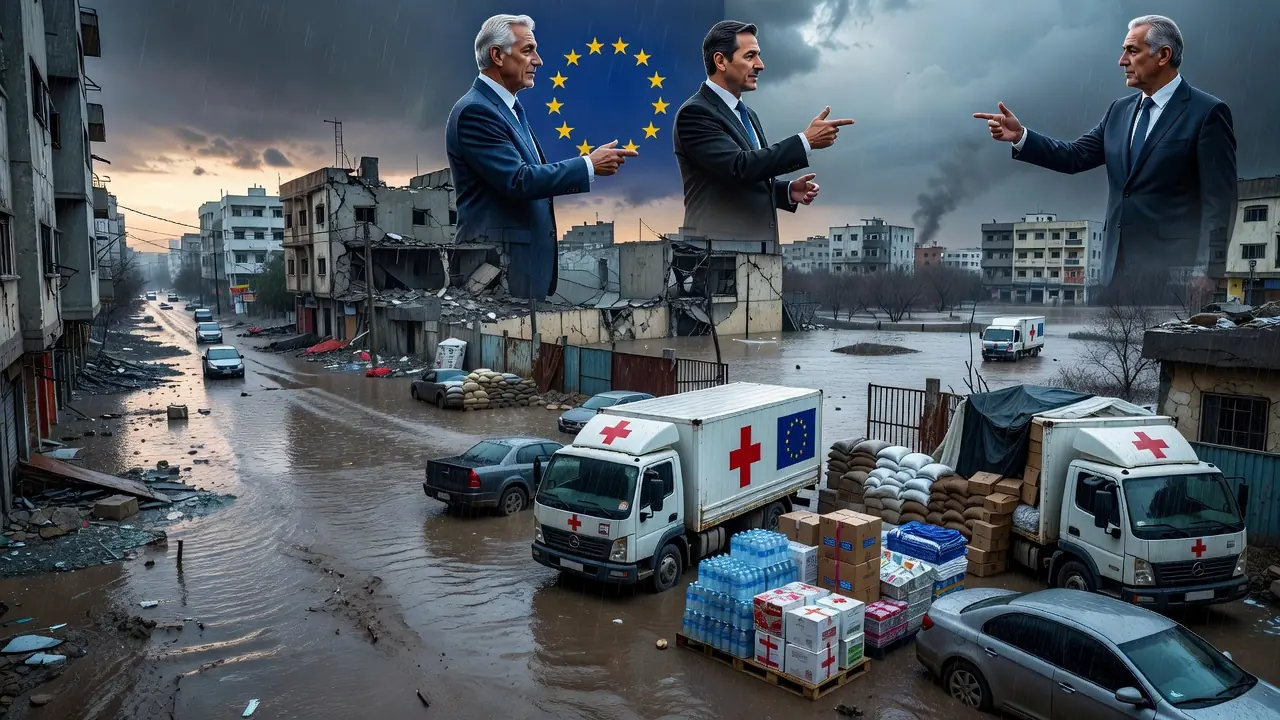
The European Union has urged Israel to immediately reopen Gaza's border crossings and allow unimpeded humanitarian aid to reach civilians, after flooding compounded an already severe shortage of food, water and medical supplies. The appeal, reported by Al Jazeera, follows renewed violence in the territory, including a drone strike in Jabaliya and an attack on the Nasser Medical Complex.
What the EU Is Asking For
EU officials have called on Israeli authorities to lift restrictions on Gaza's crossings so that aid convoys carrying food, clean water, shelter materials and medical supplies can move freely into the territory. The request comes as flooding has damaged infrastructure already weakened by months of conflict, making it harder for aid groups to reach affected neighborhoods and for residents to access basic services.
Context on the Ground
According to the reporting, Israeli strikes have been directly linked to recent damage in Gaza, including the drone killing in Jabaliya and the strike on the Nasser Medical Complex, a facility that serves as a key source of care for civilians in the area. The same infrastructure damage attributed to Israeli military action is cited as a factor that worsened the impact of the flooding, compounding difficulties for humanitarian operations already strained by access restrictions at border crossings.
Disputed Claims and Attribution
The Israeli military has described some individuals involved in the Jabaliya incident as "militants," a characterization that remains attributed to the military and presented in quotation marks rather than as an independently confirmed fact. This distinction matters for readers trying to assess competing claims in a conflict where independent verification on the ground is often limited.
Why Humanitarian Access Matters
Unimpeded aid access is a central demand of international humanitarian law during armed conflict, intended to ensure civilians can receive food, medical care and shelter regardless of the course of hostilities. The EU's call reflects a broader pattern of international pressure on all parties to a conflict to facilitate aid delivery, particularly when civilian infrastructure, such as hospitals and water systems, has been damaged. Whether and how quickly crossings reopen will determine how much relief reaches affected communities in the near term.