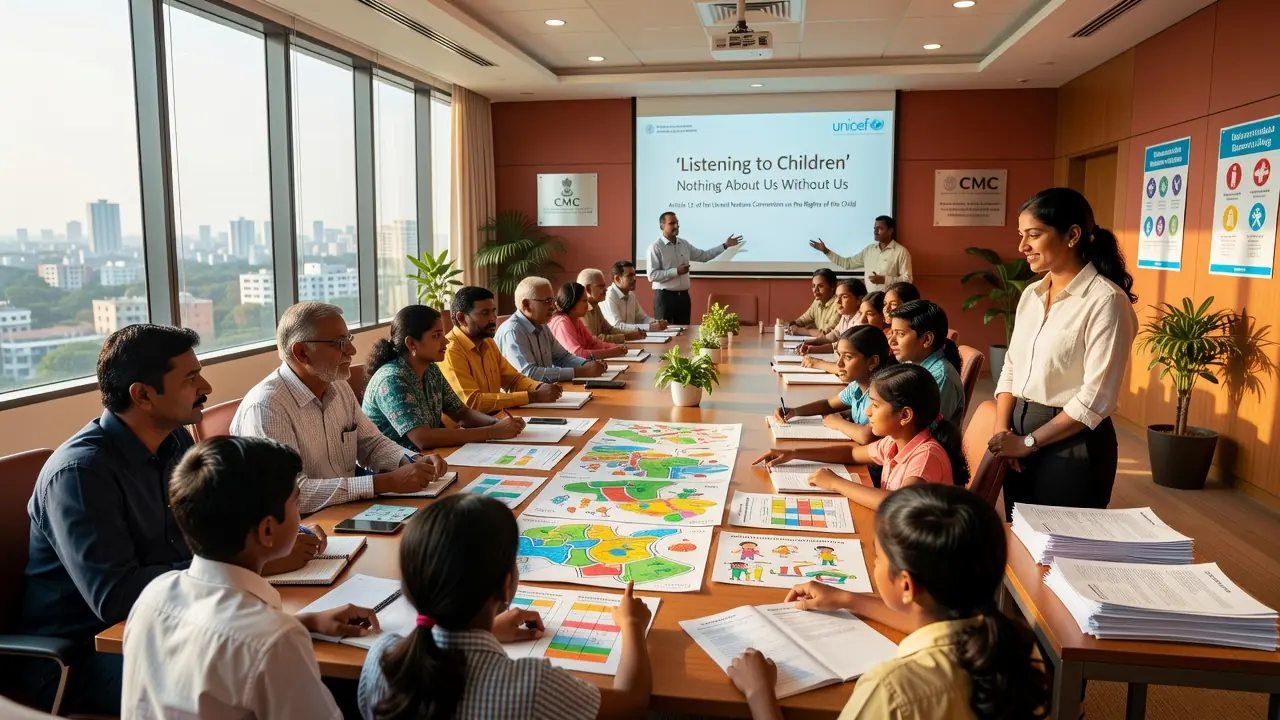
The Cyberabad Municipal Corporation (CMC), partnering with UNICEF, has begun training municipal staff to systematically collect children's opinions on parks, safety and neighborhood design. A Tuesday orientation session at CMC headquarters in Hyderabad, India, introduced senior officials and field workers to tools for conducting these consultations under the corporation's new "Listening to Children" program.
What the Program Involves
The initiative draws on Article 12 of the United Nations Convention on the Rights of the Child, which holds that children have a right to voice opinions on matters affecting them and that those views should be given appropriate weight. Rather than treating children solely as recipients of municipal services, the CMC is positioning them as active contributors to decisions about public infrastructure, framed around the motto "Nothing About Us Without Us."
UNICEF's technical team walked officials through standardized toolkits meant for use across CMC wards, including safety mapping exercises, audits of parks and neighborhoods, focus group discussions and visual feedback activities designed to make it easier for children to communicate their views.
Safeguards and Implementation
Training also addressed child safeguarding protocols, the importance of voluntary participation, non-discrimination and ethical engagement practices. Officials were instructed to record children's views without adult influence, a detail aimed at preserving the authenticity of the feedback collected.
CMC Commissioner G. Srijana directed Urban Community Development (UCD) teams - made up of project officers, community organizers and ward-level resource persons - to carry out consultations with children in every ward and to document the suggestions and concerns raised systematically.
Accountability and Open Questions
Departments involved have been asked to set up a feedback loop so children are informed about what action, if any, follows their input. The CMC frames this as a way to build civic trust and encourage participation in local governance from a young age.
As of this reporting, the program remains in its early orientation phase. No timeline for ward-by-ward rollout, specific budget figures or measurable targets have been disclosed, and it is not yet clear how children's feedback will be weighed against other planning considerations or audited for follow-through.