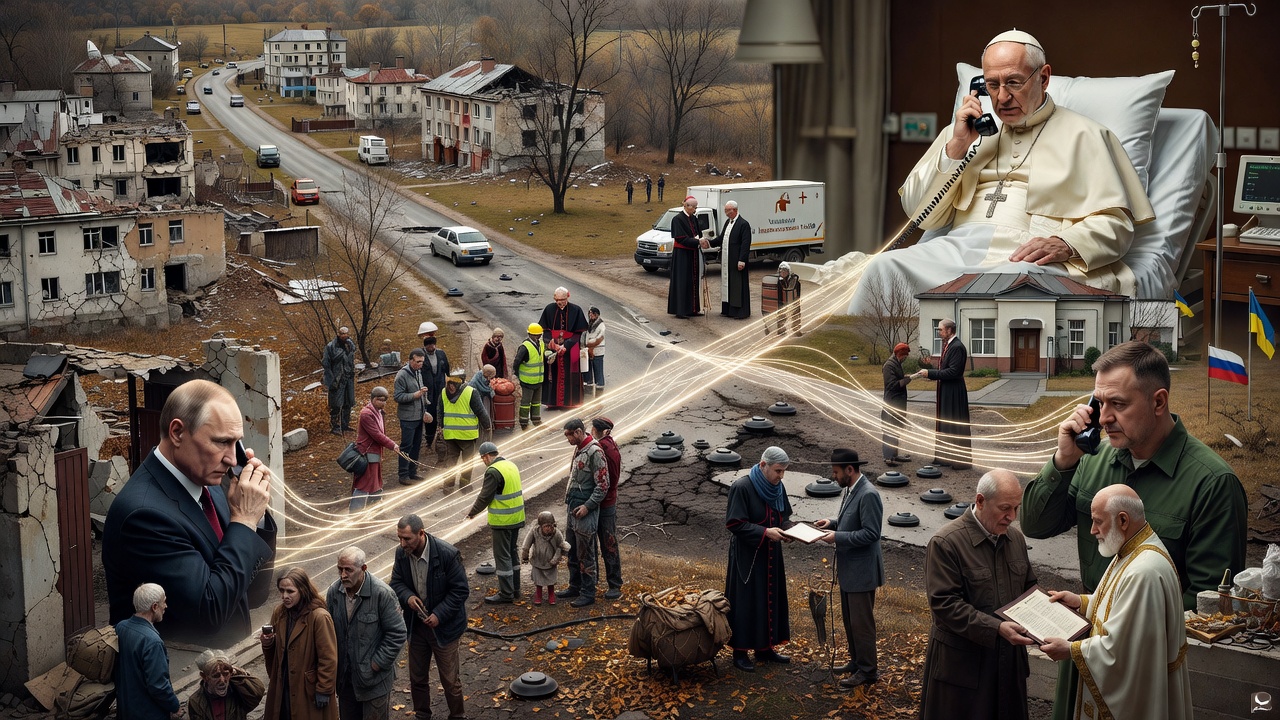
A limited truce between Russia and Ukraine opened a humanitarian corridor on October 27 to evacuate critically ill residents from Oleshky, a town in Ukraine's Kherson region that had been under siege and cut off from food supplies. The pause followed separate phone calls Pope Leo XIV made to Russian President Vladimir Putin and Ukrainian President Volodymyr Zelenskyy earlier in October, part of a broader Vatican diplomatic effort that also included prisoner-exchange talks and a papal aid mission inside Ukraine.
What the Vatican's outreach involved
Pope Leo XIV called Putin on October 16 from a hospital bed at Rome's Gemelli Hospital, where he was recovering from surgery, and spoke with Zelenskyy by phone three days later after returning to the Vatican. In both conversations, according to Vatican-linked sources, the Pope asked for guaranteed delivery of humanitarian aid and for a safe, voluntary evacuation of civilians trapped in Russian-occupied Kherson territory. Vatican officials describe this approach as "humanitarian diplomacy," a term the Holy See uses for its practice of pressing for narrow, practical openings - evacuation routes, prisoner releases - even amid active conflict, rather than attempting to broker a full settlement.
On-the-ground follow-through
The diplomatic contacts coincided with a visit by the Papal Almoner, Monsignor Luis Marín de San Martín, who heads the Vatican's Dicastery for the Service of Charity, to Kyiv, Zaporizhzhia, Dnipro and Fastiv to meet aid organizations. Separately, Cardinal Matteo Zuppi, president of the Italian Bishops' Conference and the Pope's envoy on humanitarian issues, has made trips to Moscow and Kyiv focused on prisoner exchanges and the return of minors. On October 21, Zuppi met Ukraine's ambassador to the Holy See, Andrii Yurash, and the two discussed the deteriorating situation in Oleshky and possible mechanisms for getting aid to civilians there.
A bishop's account of conditions in Oleshky
Major Archbishop Sviatoslav Shevchuk of the Ukrainian Greek Catholic Church, who met the Pope on October 23 and handed him lists of Ukrainian prisoners of war, told Vatican News that roughly 40,000 people lived in Oleshky before the war and that the town has since been surrounded, with roads mined and food deliveries blocked. He said residents resorted to eating tree leaves during the summer amid severe hunger, and that opening any humanitarian corridor required a halt in military operations - which he credited directly to the Pope's calls. Shevchuk called the intervention "a prophetic gesture in the midst of a humanitarian desert."
Scope and limits of the truce
The October 27 arrangement is described as a partial, localized pause tied specifically to evacuating people in critical condition from Oleshky - not a broader ceasefire covering the wider war in Ukraine. Independent verification of casualty figures, the exact number of current Oleshky residents, and the durability of the corridor was not available in the material reviewed. Vatican officials and Ukrainian church leaders frame the episode as one narrow, verifiable instance of diplomacy producing a concrete humanitarian opening, while acknowledging that the underlying conflict and the broader needs of the civilian population - including preparations for another winter - remain unresolved.